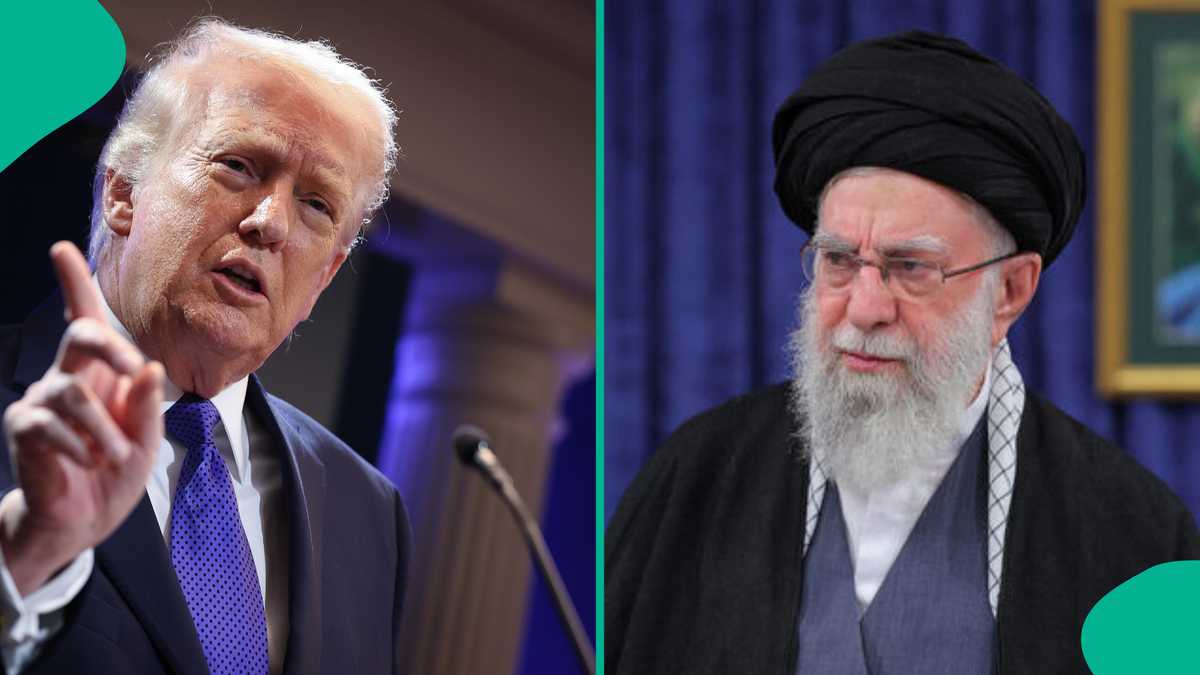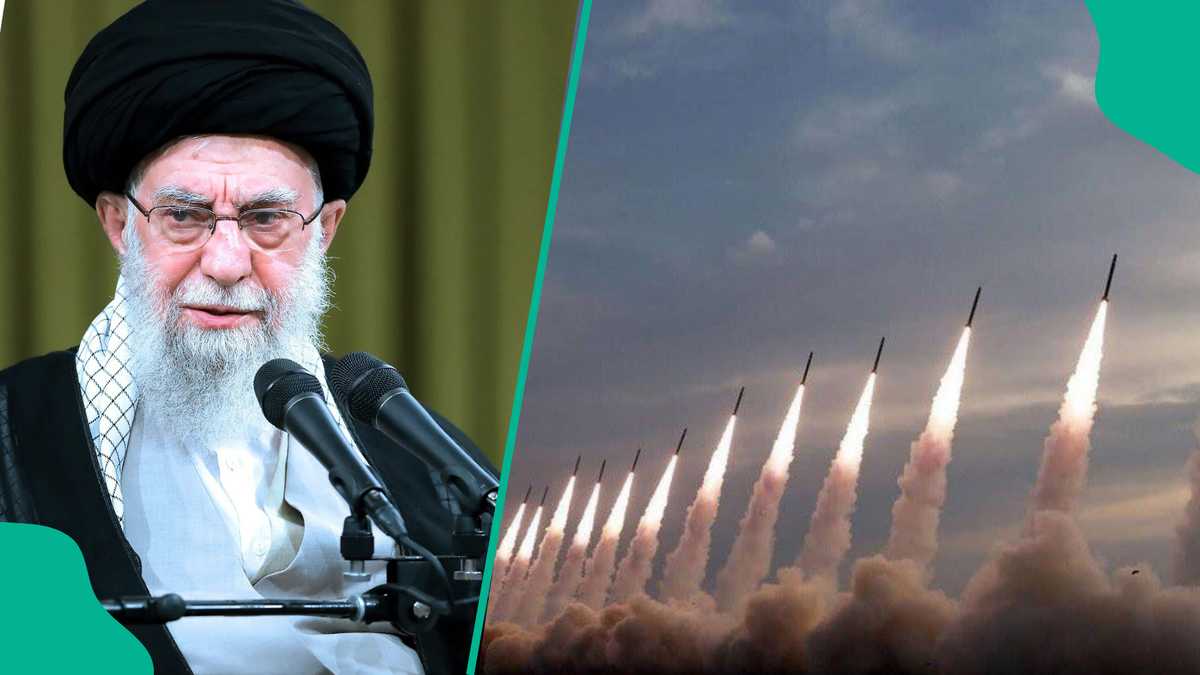

- Ali Hosseini Khamenei was assassinated on Saturday, February 28, 2026, triggering 40 days of public mourning in Iran
- Potential contenders for Supreme Leader have surfaced amid uncertainty and US-Israeli aggression against Iran
- Iran faces a pivotal moment in the succession process after longtime ruler Khamenei’s stunning assassination
Legit.ng journalist Ridwan Adeola Yusuf has over 9 years of experience covering world news and global affairs.
Tehran, Iran – Iranian Supreme Leader Ali Khamenei was killed in an Israeli strike on Saturday, February 28, as part of a massive joint military operation between the United States (US) and Israel.
As reported by Xinhua, the Iranian government has announced 40 days of public mourning following the “martyrdom” of the 86-year-old ayatollah, who had ruled Iran for nearly four decades.

Source: Twitter
Iran’s clerical regime now faces the prospect of trying to find a successor to Khamenei.

The slain veteran leader does not have an officially declared heir. Instead, the next Supreme Leader will be chosen by the assembly of experts, an elected body of 88 senior clerics, CNN noted.
This process has only occurred once since the Islamic Republic was established in 1979, when Khamenei was hastily selected following the death of Ayatollah Ruhollah Khomeini, 36 years ago.
The ruling establishment is expected to move quickly to project stability, with members of the assembly likely to convene soon to deliberate over potential candidates. However, it remains uncertain whether such a gathering is even feasible, given that US President Donald Trump has pledged that the joint US-Israeli bombing campaign targeting the regime will continue in the coming days, Al Jazeera reported.
Contenders to lead post‑Khamenei Iran
Legit.ng takes a look at some of the contenders for the position, according to analysts and experts.

1) Mohammad Mehdi Mirbagheri
Mirbagheri is a hardline cleric and a member of the Assembly of Experts who represents the most conservative wing of the clerical establishment.
He was recently reported to have justified the high death toll in Israel’s war in Gaza by saying that the death of even half the world’s population is “worth it” if it achieves closeness to God.
According to IranWire, he is strongly opposed to the West and believes a conflict between believers and infidels is inevitable. He currently heads the Islamic Sciences Academy in the northern holy city of Qom.
Mirbagheri is reportedly in his early 60s.
Mirbagheri’s photo can be viewed here on X.
2) Hashem Hosseini Bushehri
Bushehri is a senior cleric closely linked to the institutions that manage succession, particularly the Assembly of Experts, where he serves as first deputy chairman.
He is said to have been close to Khamenei but has a low profile domestically and isn’t known to have strong ties to the IRGC.

Bushehri is believed to be in his late 60s.
3) Mojtaba Khamenei
The second son of Khamenei, Mojtaba is known to wield significant influence behind the scenes and has strong links with the Islamic Revolutionary Guard Corps (IRGC), the most powerful military body in the country, as well as its Basij volunteer paramilitary force.
But father-to-son succession is frowned upon in the Shiite Muslim clerical establishment and particularly in a revolutionary Iran that came about after toppling a widely reviled monarchy. An additional hurdle is that Mojtaba, 56, is not a high-ranking cleric and has no official role in the regime. He was sanctioned by the US in 2019.
Mojtaba’s photo can be viewed here on X.
4) Hassan Khomeini
Khomeini is the grandson of the founder of the Islamic Republic, Ayatollah Ruhollah Khomeini, giving him religious and revolutionary legitimacy.
He serves as the custodian of the Khomeini mausoleum but has not held public office and appears to have little influence with the country’s security apparatus or ruling elite. He is known to be less hardline than many of his peers and was barred from running for the Assembly of Experts in 2016.

Hassan is thought to be in his early 50s.

Source: Twitter
5) Alireza Arafi
A lesser-known figure, Arafi is an established cleric with a track record in government institutions who was also a confidant of Khamenei.
The 67-year-old currently serves as deputy chairman of the Assembly of Experts and has been a member of the powerful Guardian Council, which vets candidates for election and laws passed by parliament. He is also head of Iran’s seminary system.
According to Alex Vatanka of the Middle East Institute, Khamenei’s willingness to appoint Arafi to senior and strategically sensitive positions showed he had “a great deal of confidence in his bureaucratic abilities.” Still, Arafi is not known to be a political heavyweight and doesn’t have close ties to the security establishment.
Read more on Iran:
Iran tension: FG warns Nigerians
Earlier, Legit.ng reported that the federal government issued a travel advisory to Nigerians residing in or visiting Iran and neighbouring Gulf countries following escalating military actions in the Middle East.
In a statement signed by Kimiebi Ebienfa, spokesperson of the ministry of foreign affairs, the government said it is closely monitoring the “evolving and volatile situation” in the middle east.
Source: Legit.ng