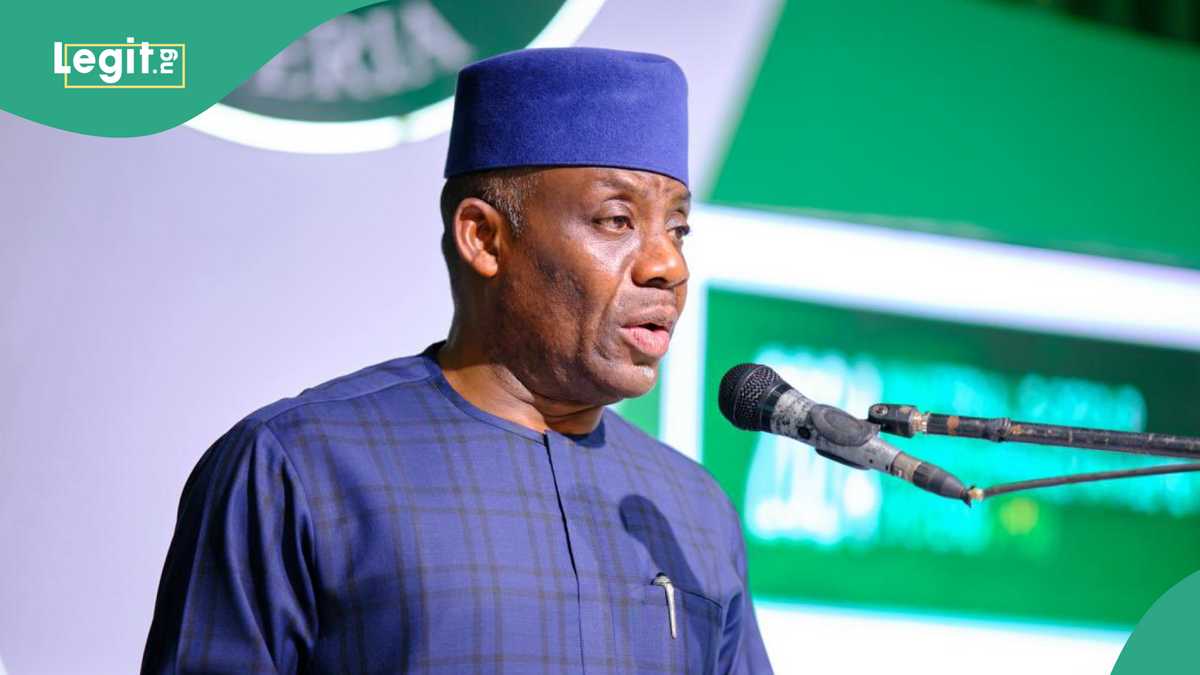

- Education ministerTunji Alausa has adopted a data-driven approach in his engagement with the National Assembly, linking budgets and policies to measurable outcomes
- Over the past two years, he has overseen reforms, including an agreement with ASUU, secured over $550 million for the HOPE-EDU programme, among others
- The ministry said its focus on digital systems, curriculum reform and re-enrolment of out-of-school children is aimed at strengthening accountability and stability in the education sector
Abuja, FCT – The minister of education, Tunji Alausa, has adopted a data-focused and results-oriented approach in his engagement with the National Assembly, presenting sector diagnostics and measurable outcomes during oversight and budget defence sessions.
At a time when some ministers have faced tense exchanges with lawmakers over budgetary allocations and sector performance, Alausa has structured discussions around teacher shortages, infrastructure deficits, out-of-school children and learning poverty indicators.

Source: Twitter
He has also linked policy proposals to Science, Technology, Engineering and Mathematics (STEM) initiatives aimed at strengthening curriculum relevance and equipping students with 21st-century skills.

According to the ministry, budget proposals under his leadership are tied to specific deliverables, including teacher retraining programmes, digital infrastructure expansion and school safety upgrades.
ASUU agreement and sector reforms
Over the past two years, the minister has overseen reforms in the education sector, including an agreement with the Academic Staff Union of Universities (ASUU) to address long-standing disputes. The framework includes salary adjustments, structured allowances and provisions aimed at strengthening university autonomy.
The ministry says the agreement ended more than 16 years of intermittent negotiations and industrial actions between the federal government and university lecturers.
International funding and school upgrades
Alausa has also secured international partnerships, including more than $550 million in funding for the HOPE-EDU programme. The initiative targets millions of pupils, supports teachers and seeks to revitalise schools nationwide through performance-based indicators.
In addition, the ministry has cleared backlogs in university approvals, facilitated the establishment of new private institutions and streamlined accreditation processes.
The government has upgraded 38 federal and state technical colleges, integrating practical training with classroom instruction to enhance skills development.

Teacher development and professional standards
The minister’s initiatives include providing teachers with digital tools, subsidised data access and professional development programmes. Reforms to the Teachers Registration Council of Nigeria and the National Teachers’ Institute are aimed at strengthening licensing processes and professional standards.
To address the out-of-school children crisis, the ministry has introduced plans to re-enrol more than one million children through community mapping, learning centres and conditional support programmes designed to encourage attendance.
Curriculum reforms have emphasised digital literacy, critical thinking and entrepreneurship to better align education with labour market demands.
Data systems and school safety
The ministry has implemented data-driven policy frameworks, including the Digital Nigerian Education Management Information System and the Nigerian Education Sector Renewed Initiative (NESRI), focusing on STEMM education, girl-child education, governance transparency and measurable outcomes.
National guidelines on emergency preparedness, security training and psychosocial support have also been introduced to improve school safety and student well-being.

Source: Twitter
2026 budget defence

During the defence of the 2026 education budget, Alausa aligned funding priorities with teacher development, infrastructure, skills acquisition and school safety, presenting lawmakers with data-based justifications.
The ministry said the approach is intended to strengthen collaboration with the legislature and improve accountability within the sector.
Education stakeholders say the reforms signal a shift toward structured policy implementation and long-term system strengthening in a sector historically affected by strikes and disputes.
FG to distribute 60,000 tablets to teachers nationwide
Earlier, Legit.ng reported that the federal government earmarked N21 billion in the 2026 budget for online learning platforms and perimeter fencing of 118 Federal Unity Colleges.
Budget details showed N14 billion was allocated for school fencing, while N7 billion was provided for online secondary education.
The Ministry of Education said the initiatives were part of ongoing reforms to expand access, improve security and strengthen digital teaching capacity.
Source: Legit.ng