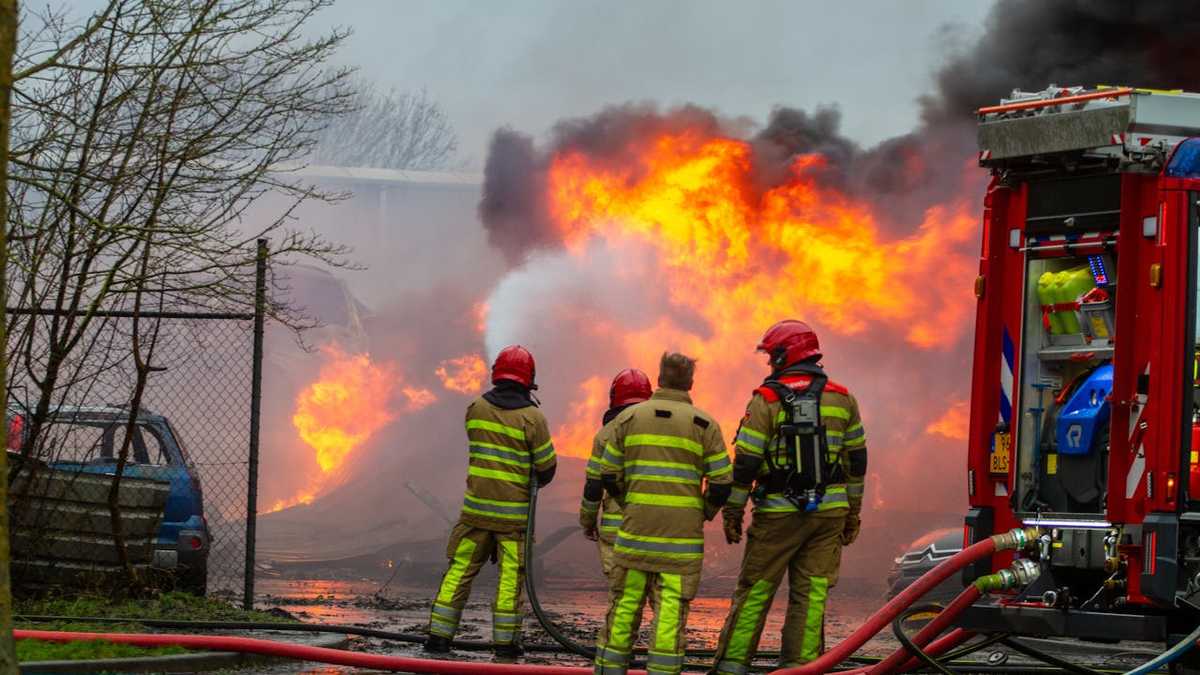

The morning the school burned, I heard my daughter coughing behind a crowd of parents. I also saw grey smoke rolling over the roof of a private primary school in Surulere, Lagos. Then a man in overalls grabbed my wrist and whispered, “Mama Amara, I knew this would happen.”

For a moment, nothing around me sounded human. Car horns screamed outside the gate. Children cried in bursts. Teachers shouted names over one another. The guard kept waving parents back as if distance could calm a mother who had just received information about her child’s classroom block being on fire.
I had dropped Amara less than forty minutes earlier.
Now I could see pupils standing on the far side of the compound in mismatched socks, some wrapped in sweaters that were not theirs, others barefoot on the dusty assembly ground. Smoke pushed from the upper windows of the lower primary block in thick breaths. Then the smell hit: burnt plastic, hot wires, paint turning bitter in the heat.

Then I saw my daughter.
She was alive. She was outside. But her face looked empty. She clung to a teacher’s skirt and stared at the building as if it had personally betrayed her.

When I reached her, she gripped me so hard that her nails dug into my arm.
“Mummy, we could smell something burning,” she said.
Before I could answer, the maintenance worker leaned close again. His face had lost all colour.
“I warned him,” he said. “I warned Mr Adeyemi, and he paid me to keep quiet.”
In that instant, I realised the fire was no longer an accident. It was someone’s choice.
My name is Bisola, and until that morning, I had tried very hard to be the kind of parent who trusted the system. I am not naturally confrontational. I work long hours in an insurance office along Victoria Island. Like many Lagos parents, I chose a private school to provide my child structure, discipline, and a feeling of safety.

My daughter’s private school was in a crowded part of Surulere where flats pressed close together, and every service carried a premium.

The school sold order: clean uniforms, neat report forms, a promise of attention. We never missed a payment; most of us stretched ourselves to cover the fees.
We wanted our children in smaller classrooms than the public schools nearby could offer. We wanted a path that looked stable. We wanted our sacrifices to buy peace of mind, not only better grades.
But beneath that polished image, small warnings kept piling up.
Amara first mentioned the flickering lights casually after supper one evening. She said the bulbs sometimes blinked during lessons, and the class laughed whenever the ceiling fan slowed down. Later, another parent posted a video in our messaging group showing sparks snapping from a socket near a corridor wall. Someone else described a sharp burning smell after a blackout.
Then came complaints about the backup generator. It had become so loud and erratic that children covered their ears when it started. Even the teachers looked tired of pretending it was normal.


At two parent meetings, we raised the issue directly. Mr Adeyemi smiled, folded his hands, and said, “Everything is under control.” He blamed the unstable electricity supply and talked about scheduled maintenance as if a timetable could make danger wait.
I wanted to believe him.
That is what troubles me now.
I knew enough to worry, but not enough to pull my daughter out. Like many of us, I mistook repeated reassurance for action. We kept paying fees. We kept packing lunch boxes. We kept sending our children into a building that had already started warning us.
The fire broke out on a Tuesday in late July, on a cold morning in Lagos. I had just reached the office and switched on my computer when my phone rang. It was Ifeoma, a mother with a Primary 3 child.
“Bisola, come back to the school now,” she shouted. “There is fire.”


I do not remember locking my drawer or telling anyone I was leaving. I only remember running to my car. Every red light felt personal. Every slow driver felt cruel.
By the time I reached the gate, smoke was pouring from one corner of the classroom block that housed the younger pupils. Teachers and guards were pushing children across the compound towards the field. Some still carried exercise books.
Others had nothing. One little boy stood crying in only one shoe. Parents pressed against the gate, yelling names, phoning relatives, trying to climb for a better view.
Mr Adeyemi was nowhere.
That absence changed the mood almost immediately. Fear became anger. We had listened to him for months. We had repeated his words to one another when doubt crept in. Yet on the morning his school caught fire, he could not be found.
When I finally reached Amara, she was trembling.


Her teacher, Mrs Okafor, told me the lights had flickered twice before going out completely. Then the room filled with a smell that made the children wrinkle their noses. Amara later repeated the words in a flat voice I had never heard from her before.
“The teacher said, ‘Get out quickly, get out now.'”
I thanked that woman more than once. She and another teacher had moved the class out before the flames spread along the ceiling. If they had paused to collect bags or line the children up neatly, the story I am telling would be much darker.
That same afternoon, parents crowded into a church hall nearby because authorities had sealed the school compound for safety checks. Everybody had a version of the same question. How had this been allowed to happen after so many complaints?
Some parents demanded refunds immediately. Others wanted criminal action.

A few still spoke cautiously, as if they were afraid of saying too much before investigators confirmed the facts.

Then more facts began to surface.
One father said his son had been moved from one classroom to another two weeks earlier because a socket had burst. Another mother said she had seen an electrician doing temporary work during pick-up the previous Friday. A teacher admitted that staff had also reported electrical faults, but had been told not to alarm parents.
By evening, the parents’ messaging group had become a record of ignored warnings. Old videos resurfaced. Screenshots reappeared. Dates lined up in a way that made all of us feel sick. What had seemed like scattered incidents now appeared as a chain leading straight to that smoke‑blackened building.
Still, the school sent out a brief message describing the fire as an unexpected electrical incident and asking families to remain calm.
Unexpected.

That word made me shake with anger.
Nothing about that fire felt unexpected to the people who had smelt burning wires, seen sparks, heard the generator strain, and complained again and again. It only seemed unexpected to those who had chosen not to listen.

Two days later, as I stood outside a pharmacy buying cough syrup for Amara because the smoke had left her throat raw, an unfamiliar number called me.
“My name is Chinedu,” the man said. “I work at the school. We need to talk.”
We met that evening at a café on Ikorodu Road, as he didn’t want anyone from the school spotting him near our estate. Chinedu arrived in a faded jacket, looking like a man who had not slept since the fire. He kept rubbing his palms together before he spoke.
Then he told us everything.
Weeks before the fire, he ran a routine check after staff reported repeated blackouts in the lower primary block.

He found damaged wiring, overloaded sockets, and signs of heat around a distribution point. He wrote it up and warned that the section needed urgent professional repair, not another patch job. According to him, he took the report directly to Mr Adeyemi.
The principal dismissed it.
Chinedu said Mr Adeyemi told him the school was already under financial pressure and could not afford a major electrical overhaul in the middle of the term. He promised to manage it until the holiday break. When Chinedu insisted the risk was serious, the principal changed tone. He offered him money and told him not to pass the report to outside safety inspectors.

Chinedu accepted.
That was the part that stunned me most, not because it excused anything, but because he did not hide his own failure. He looked down at his tea and said, “I was afraid of losing my job.”

Then he added the line that still stays with me. “After seeing the children suffer, I could not keep quiet anymore.”
He also told us something worse.
The school had scheduled temporary electrical work in the affected block on the very morning of the fire. Mr Adeyemi knew that. He had called in sick and stayed away. Until then, I had thought his absence was suspicious. After Chinedu spoke, it felt calculated.
The principal we had seen as dismissive suddenly looked darker. Not merely careless, but aware. Not merely overwhelmed, but willing to gamble with children and staff while shielding himself from the consequences.
I went home that night and watched Amara sleep with the bedroom light on because she no longer wanted darkness. I realised the worst part of betrayal is not only what happened. It is knowing somebody had time to prevent it.


Once Chinedu decided to speak, the others found courage too.
A group of us formed a parents’ committee within a day. We gathered screenshots from the messaging group, copied videos of sparks and faulty sockets, and listed dates of every complaint we could verify. Chinedu provided his statement and the earlier report he had kept on his phone. Mrs Okafor and two other staff members confirmed knowledge of electrical problems. Someone had raised the issue internally.
We submitted everything to the investigators and the school board.
This time, they couldn’t soften the matter using polite language.
Investigators confirmed that the school management ignored the warning signs and failed to follow the proper procedures. They had used temporary fixes instead of a certified repair. The backup generator system had added strain instead of stability.
The school had delayed safety checks and had poorly kept records. Worst of all, management had known that the affected block carried a higher risk and still kept pupils in those rooms.


Mr Adeyemi was first suspended, then formally charged with negligence and misconduct. I still remember the day the news reached our parents’ group. No one celebrated. But there was relief in seeing authority finally move in the direction of truth. For weeks, we had felt as though we were shouting into smoke. At last, somebody in power had listened.
The school faced penalties and had to close until it completed essential work. Certified inspectors came in. They replaced faulty wiring. Fire extinguishers went up on bare walls. Staff reviewed assembly procedures. Parents attended meetings before reopening. For the first time, questions received real answers instead of polished phrases.
At home, recovery looked smaller and slower.
Amara flinched whenever lights flickered. She asked me twice whether schools could burn while children were inside. She wanted me to wait at the gate longer when classes resumed in a different block. So I did. Healing did not follow the school calendar. It moved at the pace of a frightened child.


The day she returned, she squeezed my hand and looked up at the repaired building. It looked cleaner and safer. But I knew bricks and wiring were not the only things under inspection. Parents had changed, too. We had learned to question, to document, and to refuse reassurance without proof.
The fire exposed faulty wires, yes.
It also exposed what happens when image matters more than safety, when supervisors silence workers by fear, and when leadership counts on parents being too busy to push back.
That system shifted only when accountability became someone’s problem.
Before this happened, I thought danger usually arrived with noise. I believed real threats should announce themselves clearly enough that any responsible institution would act accordingly. I no longer believe that. Sometimes danger comes as small dismissals: a smell ignored, a complaint delayed, a report buried, a leader smiling while doing nothing.
That is how trust gets misused.


As parents, we are often told not to overreact. We are encouraged to be reasonable, patient, and cooperative. Those instincts work in ordinary moments. They turn dangerous when people in authority use them to buy time and dodge responsibility.
Looking back, I can see how often we accepted comfort instead of evidence. We took calm words as proof of competence because we wanted our children to be safe. Believing was easier than confronting the possibility that they weren’t.
I also think about Chinedu.
His confession was chilling because it revealed knowledge, bribery, and threats. But it also exposed a reality many workers live with. People stay quiet when rent is due, when jobs are scarce, when speaking up feels like jumping without knowing who will catch you.
His silence nearly cost children their lives. His honesty helped prevent that silence from winning completely. Both truths matter.
Now I ask different questions in every place responsible for children. Who inspected this?


When was it fixed? Who signed off? What happens if someone ignores a complaint? I do not ask because I enjoy suspicion. I ask because safety should never depend on blind trust.
Amara is back in class now. She laughs again. She runs again. But whenever I pack her bag in the morning, I remember that smoke and that whisper at the gate.
How many disasters would never happen if people treated the first warning as enough?
This story is inspired by the real experiences of our readers. We believe that every story carries a lesson that can bring light to others. To protect everyone’s privacy, our editors may change names, locations, and certain details while keeping the heart of the story true. Images are for illustration only. If you’d like to share your own experience, please contact us via email.
Source: TUKO.co.ke