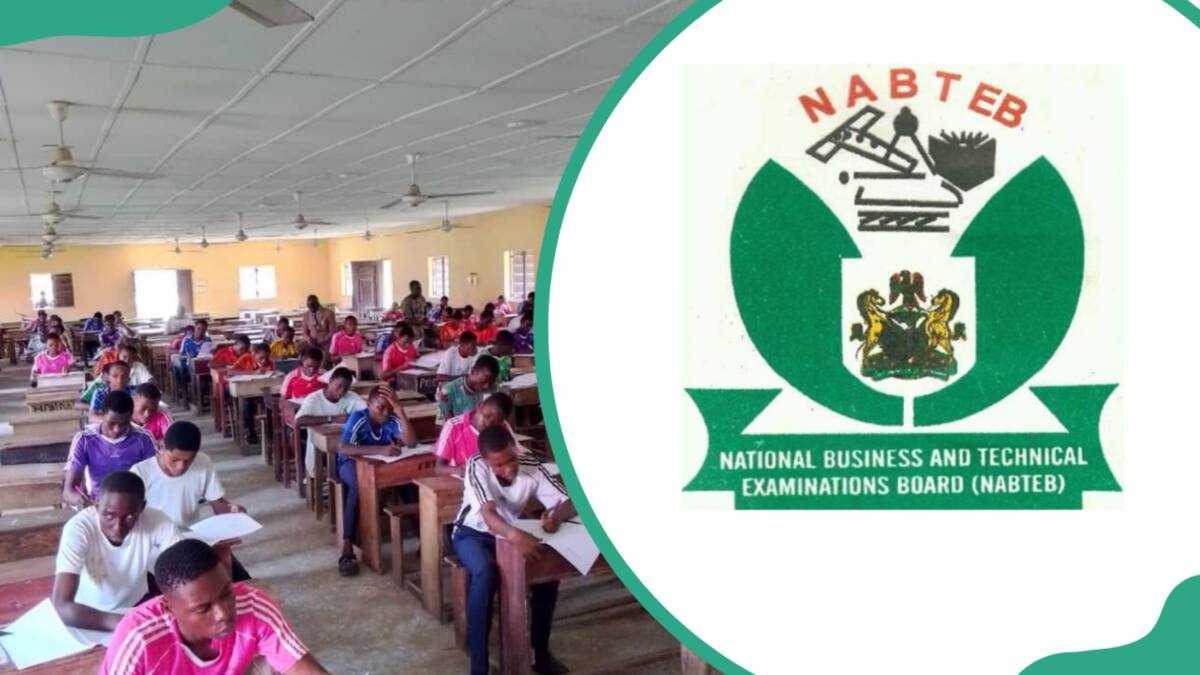

Choosing the right science subjects for WAEC 2026 is the first real admission decision a Nigerian secondary school student will make. The West African Examinations Council has tightened its subject combination rules this year, capping candidates at nine papers and barring science students from registering for Economics. Here is the full list of WAEC 2026 science subjects, the 2026 timetable, registration fees, syllabus highlights, and the career combinations that actually get students into university.

Source: UGC
TABLE OF CONTENTS
Key takeaways
- Science students in WAEC 2026 must register for English Language, Mathematics, Biology, Chemistry, Physics, Civic Education, and one trade/entrepreneurship subject — plus a maximum of two electives to reach nine subjects total.
- Economics has been banned for science and arts students in 2026; only commercial (business) students may register for it, according to WAEC’s new subject combination rules.
- The 2026 May/June WASSCE runs 21 April – 19 June 2026, with Chemistry on 11 June, Physics on 1 June, and Biology on 16 June.
- The standard 2026 SSCE registration fee is ₦27,000, and the exam is being delivered as a computer-based test (CB-WASSCE) for the first time at scale.

Science subjects for WAEC 2026
WAEC offers a wide range of subjects for students in different academic streams. For science students, the selection includes core sciences, applied sciences, and essential foundational subjects.
What is WAEC?
It is a West African examination body mandated to determine the examinations required in the public interest in English-speaking West African countries, conduct those exams, and award certificates equivalent to those of other international exam bodies.
What are the compulsory subjects in WAEC for science students?
Nigerian senior secondary schools group students into four streams: Science, Arts, Business (Commercial), and Trade. The science stream is built around five core academic subjects: English Language, Mathematics, Biology, Chemistry, and Physics, paired with Civic Education and a trade/entrepreneurship subject.
From that seven-subject spine, candidates add up to two electives (most commonly Further Mathematics, Agricultural Science, or Geography) to hit the nine-subject ceiling WAEC set for the 2026 May/June WASSCE. The list below is the quick version most students ask for.

- One trade subject
- Agricultural science or economics
- Biology
- Chemistry
- Civic education
- English
- Geography
- Mathematics
- Physics
What are the compulsory subjects in WAEC?
Every science student sitting the WAEC 2026 May/June WASSCE must register for the following seven papers. None of them can be swapped or dropped.
- Civic Education
- Economics (optional for some candidates)
- English
- Mathematics
- One trade subject
What subjects are needed for Computer Science in WAEC?
For students interested in Computer Science, it’s essential to focus on subjects that provide a strong foundation in both theoretical and practical aspects of computing. Key WAEC subjects for aspiring computer scientists include:
- Mathematics
- Further Mathematics
- Physics
- Computer studies/ICT
What are the WAEC-recommended textbooks for all subjects?
To excel in WAEC, using the right textbooks is crucial. WAEC provides a list of recommended textbooks for all subjects, which can typically be found on their official website or through school guidance. These textbooks are tailored to cover the syllabus comprehensively, ensuring students are well-prepared for their exams.
What is a trade subject?
It is a course that offers students the opportunity to acquire some entrepreneurship skills by instilling in them hands-on skills. Common options include carpentry and joinery, upholstery, painting, plumbing, welding, woodworking, mechanics, and bookkeeping.
Trade subjects for WAEC 2026
WAEC classifies trade and entrepreneurship subjects as a separate compulsory category.
At registration, every science student must pick one from a list that includes auto-mechanics, electrical installation, refrigeration and air conditioning, block-laying and concreting, painting and decorating, plumbing, welding and fabrication, catering craft practice, garment making, cosmetology, data processing, keyboarding, book-keeping, printing craft practice, leather goods manufacturing, GSM phone maintenance, and several more.
The trade subject carries the same weight as any other paper on the certificate and counts toward the nine-subject maximum.
Is a trade subject compulsory in WAEC?
Yes, every student must have at least one trade subject on their list.
How many subjects will a science student write in WAEC 2026?

Each candidate must register a minimum of seven and a maximum of nine subjects, according to the new WAEC combination rules released in October 2025 and reported by The Nation and P.M. News.
For a typical science student, that math works out to:
- 3 cross-stream compulsory papers (English, Mathematics, Civic Education)
- 3 core sciences (Biology, Chemistry, Physics)
- 1 trade/entrepreneurship subject
- Up to 2 electives (Further Mathematics, Agricultural Science, Geography, Technical Drawing, ICT, Health Science, or a Nigerian language)
Most universities require five credit passes at WASSCE, so running the full nine subjects is a safety net. Register for more than nine, and the system will reject the form.
WAEC syllabus 2026 for science students
The WAEC syllabus 2026 outlines every topic, skill, and assessment objective candidates must cover for each subject. It is published by the council and available free of charge on the official WAEC Nigeria website.
WAEC syllabus for Biology 2026
Biology covers five broad units: variety of living things, organisation of life, evolution of life, continuity of life, and ecology. The 2026 paper keeps three papers: Paper 1 (objective, 60 marks, 1 hour), Paper 2 (essay, 80 marks, 2 hours), and Paper 3 (practical, 80 marks).

WAEC syllabus for Chemistry 2026
Chemistry is split into physical, inorganic, and organic chemistry. The 2026 assessment has an objective paper, an essay paper, and a practical component, with the practical alternatives running on 20 May and 9 June 2026.
WAEC syllabus for Physics 2026
Physics spans mechanics, waves and optics, heat energy, electricity and magnetism, atomic and nuclear physics, and fields. Practical sessions are scheduled for 15 and 18 June 2026.
WAEC syllabus for Further Mathematics 2026
Further Mathematics covers pure mathematics, statistics, mechanics, and coordinate geometry. It is a single-day exam on 21 May 2026.
Science subjects for WAEC 2026 PDF download
The council publishes the WAEC syllabus 2026 science PDF download on its official portal at waecnigeria.org. Students can also access the WAEC syllabus for all subjects 2026, including science subjects for WAEC 2026 PDF versions for Biology, Chemistry, Physics, Further Mathematics, and Agricultural Science directly from the council’s resource page.

How to register for WAEC 2026
WAEC runs two registration windows each year: school candidates (SSCE) in the first quarter and private candidates (GCE) across two series. Here is what a school candidate goes through:
- Get a WAEC PIN from the school, a CBT centre, or an accredited agent.
- Log in to the WAEC registration portal at registration.waecdirect.org and create a profile.
- Fill in personal and subject details, select all seven compulsory papers plus up to two electives, and upload a recent passport photograph.
- Pay the registration fee and print the acknowledgement slip.
- Collect your photo card and examination slip from the school registrar or directly from the portal.
The standard 2026 SSCE registration fee is ₦27,000, as announced by WAEC Nigeria, plus a ₦500 commission to accredited banks or agents. Some exam centres add a separate logistics charge — confirm with the school before paying.
Private (GCE) candidates follow a similar process on the same portal, but their fees vary with subject count: ₦14,000–₦15,000 for one to three subjects, ₦20,000–₦22,000 for four to six, and ₦25,000–₦28,000 for seven to nine.

How to check the subjects you registered for WAEC?

Source: UGC
If you registered for WAEC as a private candidate, you can confirm your registered subjects using your WAEC Computerised Assisted School System (CASS) reference number. Here is what you can do:
- Visit the WAEC Request Management System.
- Look for the service titled “CASS Confirmation”.
- Enter your CASS reference number and your email address in the designated fields.
- Click “Proceed”.
- This will display the subjects you registered for under your CASS reference.
Frequently asked questions
How many subjects are written in WAEC 2026?
Every candidate registers a minimum of seven and a maximum of nine subjects. Three are compulsory across all streams (English Language, Mathematics, Civic Education), one must be a trade or entrepreneurship subject, and the rest depend on the student’s stream.
What subject will a science student write in WAEC?
A science student sits English Language, Mathematics, Biology, Chemistry, Physics, Civic Education, a trade subject, and up to two electives (typically Further Mathematics, Agricultural Science, Geography, Technical Drawing, ICT, Health Science, or a Nigerian language).

How many subjects are written in WAEC?
The WAEC subject for Science students’ combination rule caps candidates at nine subjects and requires a minimum of seven. This applies to both the SSCE (school candidates) and the GCE (private candidates).
What are the requirements for a Bachelor of Science with WAEC results?
Nigerian universities generally ask for five credit passes at WASSCE in English Language, Mathematics, and three relevant science subjects obtained in not more than two sittings. Course-specific requirements add electives like Further Mathematics (for Engineering) or Agricultural Science (for Agriculture).
In which countries does WAEC conduct exams?
The body conducts exams in various Anglophone West African countries. These include Ghana, Nigeria, Sierra Leone, Liberia, and the Gambia.
What are other WAEC options besides science?
One can also choose social sciences, arts, or commercial options.
How many subjects are in the WAEC syllabus?
The syllabus currently has 105 units. These include all options available under the science, arts, social sciences, and commerce subject options.

What is the minimum number of subjects for Engineering?
WAEC requires a minimum of five credit passes, including English and Mathematics. Additionally, three credit passes are needed in other relevant science subjects such as Biology, Physics or Chemistry.
Who can be a WAEC examiner?
Examiners are typically graduate teachers in secondary schools or lecturers in colleges of education, universities, and polytechnics. A prospective examiner must be a graduate in the unit he is appointed to mark.
Does WAEC replace lost certificates?
No. Instead, the body usually issues statements of results to the owners of lost certificates or, when necessary, confirms their results for a fee.
There are nine science subjects for WAEC 2025. These include the five units that are compulsory for all WAEC students, and four additional ones designed for science students. Having this information is essential for the subject registration.
Legit.ng recently published an article about the largest universities in Nigeria. The country is renowned for its vibrant economy and numerous educational institutions. These universities vary greatly in size, student population, and courses offered.
Which are the largest institutions of higher education in Nigeria? How big are they, and what are they best known for?
Source: Legit.ng