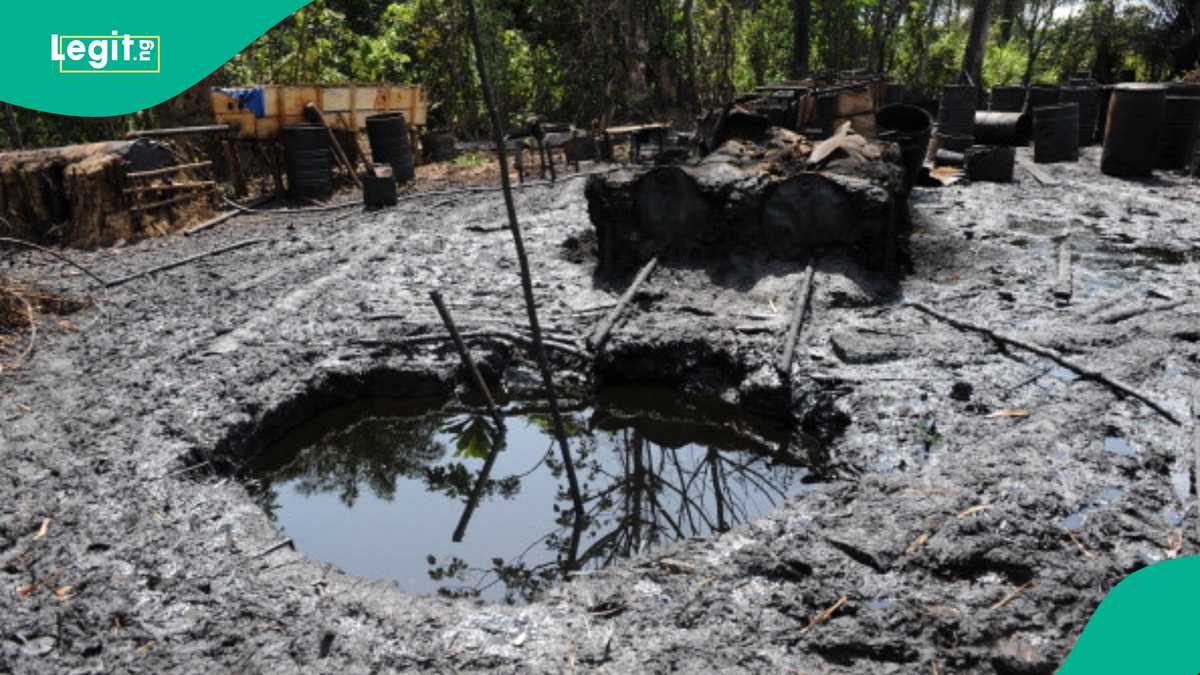

- Tantita said its intensified operations in the Niger Delta led to 586 arrests and 125 court cases against oil theft
- The security firm said the new focus on prosecutions shows a shift from arrests to legal actions in combating oil theft
- It added that the crackdown on crude oil theft disrupts supply routes and targets illicit export networks
A private security contractor engaged in pipeline surveillance in the Niger Delta says intensified operations against crude oil theft have led to hundreds of arrests and a growing number of prosecutions, in what officials describe as a more coordinated push to disrupt illicit export networks.
Tantita Security Services Nigeria Limited said its recent enforcement drive resulted in 586 arrests, with 225 cases initiated and 125 already filed before courts. The firm added that 28 convictions have been secured so far.

Source: Getty Images
Oil theft in Nigeria: Focus shifts to prosecution, not just arrests

The figures suggest a shift from routine interdictions to legal follow-through, a weak point in past anti-theft efforts. Industry observers have long argued that arrests rarely translate into convictions, allowing organised networks to regroup.
According to the report, the cases now before the courts are tied to alleged involvement in illegal bunkering, transportation and sale of stolen crude.
Oil theft: Targeting supply routes and export channels
Operations focused on dismantling the logistics behind oil theft, including illegal loading points, makeshift jetties and marine routes used to move crude to offshore destinations.
Tantita said several vessels linked to suspected smuggling activities were intercepted, while unauthorised evacuation channels were disabled. By targeting these routes, enforcement teams aimed to cut off access to international buyers and reduce incentives for theft.
Oil theft: Disrupting a long-standing illicit economy
Oil theft remains a major drain on Nigeria’s production and revenue, with losses often running into hundreds of thousands of barrels per day.
Tantita said its strategy centres on “choking” the value chain, from tapping pipelines to final export, using surveillance technology alongside ground and marine patrols.
Analysts say the combination of arrests and ongoing prosecutions could indicate a more sustained enforcement cycle, though its long-term impact will depend on consistent legal outcomes and broader reforms in the sector.

For communities in the Niger Delta, the crackdown also carries social implications, as many locals depend on informal oil-related activities for survival. Balancing enforcement with economic alternatives remains a key challenge for authorities.
Still, the latest figures point to a more assertive approach, with officials signalling that those involved in crude oil theft are increasingly being pursued in court rather than merely displaced from one operation to another.

Photo credit: Olukayode Jaiyeola/NurPhoto
Source: Getty Images
Agbese warns against fragmenting Niger-Delta pipeline surveillance
Meanwhile, deputy spokesperson of the House of Representatives Philip Agbese earlier warned that fresh calls to break up pipeline surveillance contracts in the Niger Delta could weaken coordination and threaten recent progress in protecting oil infrastructure.
In a statement made available to Legit.ng, he said the growing political tone around the debate risks undermining national security priorities.
Speaking in Abuja, Agbese reacted to pressure from groups seeking to decentralise pipeline surveillance operations currently managed by private firms such as Tantita Security Services Nigeria Limited.
Source: Legit.ng