

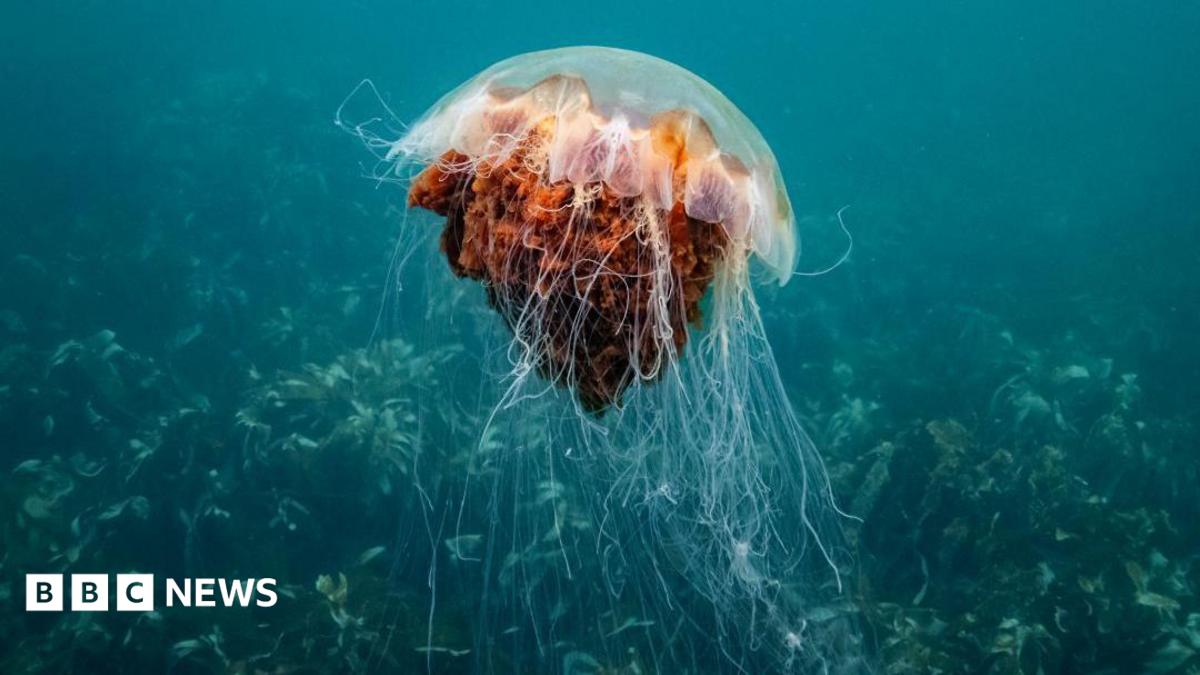
July and August are peak months for jellyfish sightings in Scotland.
“The number and distribution of jellyfish are impacted by many different factors,” said Anna Bunney of the Marine Conservation Society, which runs a nationwide survey of jellyfish.
“This includes sea temperatures, the availability of plankton for feeding, which peaks during the summer months when it is warmer, and ocean currents.”
Sea temperatures tend to lag behind air temperatures, Bunney says.
The maximum air temperatures in Scotland usually occur in July and August, whereas sea temperatures are at the warmest in August and September.
When the sea starts to get warmer, it means a return of the jellyfish.