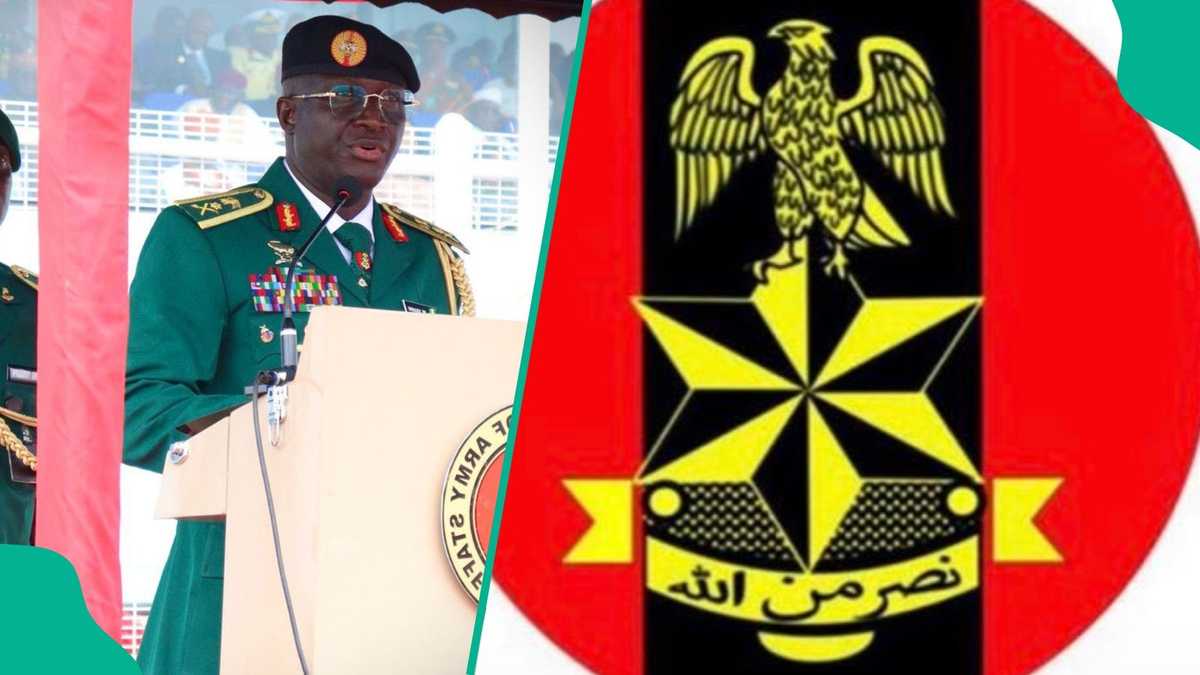

- A Facebook post claimed the Federal High Court dismissed a lawsuit seeking the removal of the Arabic inscription from the Nigerian Army logo
- Fact-checkers have traced the claim to a real 2020 suit filed by Lagos lawyer Malcolm Omirhobo, but could not confirm the alleged judgment
- The viral post also wrongly described the Federal High Court as Nigeria’s apex court, a title that belongs to the Supreme Court
A Facebook post that has been circulating since July 20, 2026, claims that the Federal High Court of Nigeria dismissed a lawsuit aimed at removing the Arabic inscription from the Nigerian Army’s logo. The post, published by a user named Musa Muhammad Tajudeen, attracted wide engagement, with some users sharing it as fact and others demanding proof.
The claim spread across multiple Facebook pages before fact-checkers investigated it because of its sensitive nature and reach.

Photo Credit: @HQNigerianArmy
Source: Twitter
Fact about claims on Nigeria Army logo

According to Dubawa, a Lagos-based lawyer and human rights activist, Malcolm Omirhobo, did file a suit at the Federal High Court in Lagos in 2020, challenging the Arabic inscription on the Nigerian Army logo. The case was assigned Suit No. FHC/L/CS/2/2020. Omirhobo argued that placing Arabic writing on official national symbols conflicted with Nigeria’s constitutional status as a secular state and sought the removal of the inscription among other reliefs.
However, confirming that a suit was filed is not the same as confirming the judgment described in the viral post. DUBAWA searched available news reports and found no credible evidence that the Federal High Court delivered the specific ruling attributed to it in the Facebook post.
The fact-checkers also noted a significant factual error in the post itself. It refers to the Federal High Court as the “apex court,” but that title belongs exclusively to the Supreme Court of Nigeria. The Federal High Court, while a superior court of record, is not the country’s highest judicial authority.
Separate naira case adds confusion
The fact-checking also uncovered a related but distinct court case. A Federal High Court ruling from July 2024 dismissed a separate suit by Omirhobo concerning Arabic inscriptions on Nigerian currency. That case had nothing to do with the Army logo, and multiple reputable media outlets reported on its outcome at the time.

No such comparable media coverage exists for a judgment on the Army logo case, which deepens doubt about the claim in the viral post.
Thus, it was concluded that the Facebook post is misleading. While Malcolm Omirhobo did file the 2020 Army logo suit, there is no independently verifiable evidence that the Federal High Court has delivered the judgment described. The post’s misidentification of the Federal High Court as the apex court further undermines its credibility.

Photo Credit: @HQNigerianArmy
Source: Twitter
List of former generals killed by bandits
Legit.ng earlier reported that Nigeria has been faced with the challenges of insecurity for decades, with hundreds of lives lost and millions of properties destroyed.
Several serving military and other personnel of the country’s security operatives have been killed, including retired generals.
The lingering insecurity has become a major topic of discussion in the country ahead of the 2027 general elections.
Source: Legit.ng