

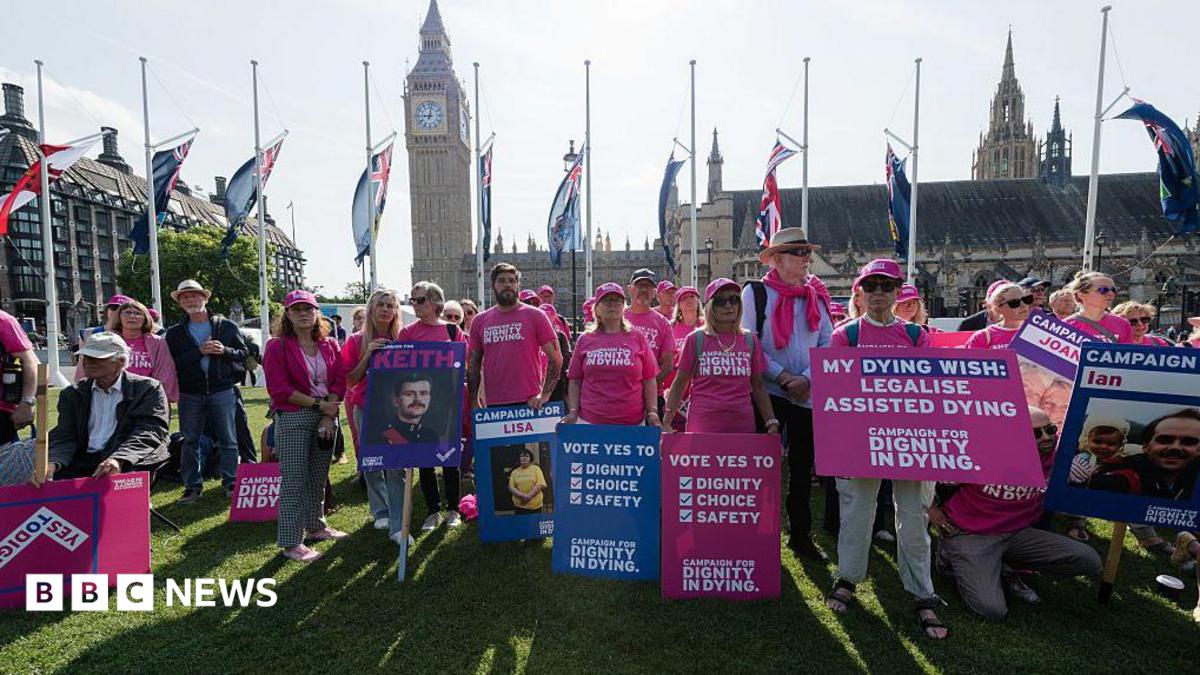
Prime Minister Andy Burnham has said that before assisted dying is considered in England and Wales, the funding of palliative and social care should be “fixed”.
It is the first time Burnham has set out his position on the issue since becoming prime minister, as MPs prepare to debate it again when Parliament returns in September.
The government is likely to remain officially neutral, but Burnham’s remarks suggest he personally will not back a bill being proposed by Labour MP Lauren Edwards.
The position is a shift from that of former Prime Minister Sir Keir Starmer, who voted in favour of the previous attempt to legalise assisted dying and gave time for the issue to be debated in Parliament.
Sir Keir’s support was privately cited by some Labour MPs as a reason they backed the bill last time.
Burnham told reporters: “I take the view that that debate – and I don’t say that there shouldn’t be a debate at some point about those issues – personally, I think there’s something that needs to happen first.
“That is the fixing of the funding of palliative care and social care.
“I think it is very challenging to introduce that wider debate in a context of people not receiving that care and having the peace of mind about that care.”
In 2025, MPs voted in favour of a bill proposed by Labour MP Kim Leadbeater to legalise assisted dying.
But the bill was not passed by the House of Lords, after an unprecedented number of suggested amendments delayed its progress until it ran out of time in April this year.
Its opponents argued it had substantial flaws that risked vulnerable people being pressured into ending their lives early.
The proposed law – known as the Terminally Ill Adults (End of Life) Bill – would have allowed people over the age of 18 who were expected to die within six months to be given help to end their own life, subject to certain safeguards.
Labour MP Lauren Edwards plans to bring forward an identical bill in order to “finish the job” started by Leadbeater.
Following Burnham’s comments, she said improving social care and legalising assisted dying was “not a case of either/or” and that the two things “can and must go hand in hand”.
“The bill that has been before Parliament and thoroughly debated since October 2024 provides for a four-year implementation period – that means if my current bill becomes law next year, we would have until 2031 to fix the status quo that Andy Burnham rightly says is broken.”
Jess Asato – a Labour MP and opponent of the bill – said MPs had “a responsibility to consider the safety of introducing such a flawed bill into a broken and failing care system”.
“There can be no meaningful choice and no dignity at the end of life if we don’t have a palliative care system that provides basic support for the vulnerable and an affordable social care system that gives everyone dignity at the end of their lives.”
Burnham was asked about his views on assisted dying after he had announced plans to reform the social care system, with the view to create a national care service and to reach a political consensus on how to fund it.
In 2024, just before the first Commons vote on the Terminally Ill Adults (End of Life) Bill, Burnham told BBC Manchester he would “probably vote in favour of it” if he was in Parliament.
When he was previously an MP he abstained from a 2015 vote on another bill to legalise assisted dying because of concerns over safeguards and people feeling under pressure.
But he told the BBC in 2024 that he had had “family experience in the nine years since that has changed my view”.
He said: “I think we do allow people to suffer and families to suffer too much.”
He caveated his support as being for the principle of assisted dying and insisted he would want a requirement before any new law was implemented that hospices would be “properly funded and sorted out”.